72
/ 100
Mostly True
Global
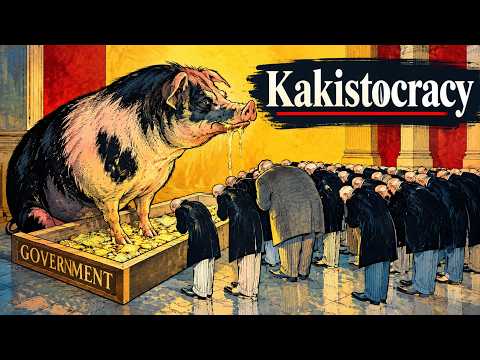
The video discusses the concept of 'kakistocracy', where the worst individuals rule, and explores how modern governments may exhibit this tendency. It highlights the influence of lobbyists and the role of central banks in unsustainable government spending.
Infact verdict: Mostly True (72/100).
The claims extracted from the video cover a range of political and economic topics. The term 'kakistocracy' is accurately defined as rule by the worst, supported by multiple sources. The idea that modern states tend to become kakistocracies is more subjective and lacks strong empirical evidence, resulting in a mixed score. The claim about political positions attracting individuals motivated by personal gain is complex, with evidence showing diverse motivations. The influence of lobbyists on government decisions is well-documented, particularly in sectors like healthcare. Finally, the role of central banks in potentially unsustainable government spending through monetary expansion is supported by economic literature, though it is a nuanced topic with both risks and benefits.
November 02, 2026
Language: en_US
5 claims analyzed
How is this score determined? →
The term 'kakistocracy' is well-defined as 'rule by the worst,' derived from Greek words. This is corroborated by multiple reliable sources, including Wikipedia and Academy of Ideas.
Fact Check Score
None
Fact Check Weight
0
Web Consensus Score
95
Web Consensus Weight
40
Source Quality Score
90
Source Quality Weight
20
Llm Reasoning Score
95
Llm Reasoning Weight
40
Llm Reasoning Score Raw
95
Weighted Total
96
Evidence Summary
Multiple sources confirm the definition of 'kakistocracy'.
The claim is subjective and lacks empirical evidence. While some sources suggest a tendency towards kakistocracy, this is not universally accepted or proven.
Fact Check Score
None
Fact Check Weight
0
Web Consensus Score
50
Web Consensus Weight
40
Source Quality Score
50
Source Quality Weight
20
Llm Reasoning Score
50
Llm Reasoning Weight
40
Llm Reasoning Score Raw
50
Weighted Total
50
Evidence Summary
Subjective claim with limited empirical support.
The motivations for entering politics are diverse, including both personal gain and public service. The evidence does not support a clear predominance of personal gain over public service.
Fact Check Score
None
Fact Check Weight
0
Web Consensus Score
55
Web Consensus Weight
40
Source Quality Score
50
Source Quality Weight
20
Llm Reasoning Score
60
Llm Reasoning Weight
40
Llm Reasoning Score Raw
60
Weighted Total
56
Evidence Summary
Diverse motivations for political positions; no clear consensus.
There is strong evidence that lobbyists significantly influence government decisions, particularly in sectors like healthcare, as supported by multiple studies and reports.
Fact Check Score
None
Fact Check Weight
0
Web Consensus Score
85
Web Consensus Weight
40
Source Quality Score
80
Source Quality Weight
20
Llm Reasoning Score
90
Llm Reasoning Weight
40
Llm Reasoning Score Raw
90
Weighted Total
92
Evidence Summary
Strong evidence of lobbyist influence in government decisions.
While central banks can use monetary expansion to fund government spending, this can lead to inflation and other economic risks, making it a complex issue with both potential benefits and drawbacks.
Fact Check Score
None
Fact Check Weight
0
Web Consensus Score
65
Web Consensus Weight
40
Source Quality Score
60
Source Quality Weight
20
Llm Reasoning Score
70
Llm Reasoning Weight
40
Llm Reasoning Score Raw
70
Weighted Total
66
Evidence Summary
Monetary expansion can fund spending but poses risks.
 ▶ Video source
https://youtu.be/L2PHH59F_1g
youtu.be ↗